Teams like the Royals look to keep their playoff hopes alive, while their opponent, the Rangers, are hoping to give their young talent a tryout.
Major League Baseball expanded rosters yesterday, allowing all teams to take any player on their 40 man roster and immediately put him on their big-league club.
This may be great for teams like the Cubs and Astros, who are getting young teams ready to compete by bringing up a ton of prospects for their cups of coffee. For major competitors, though, like the Dodgers and Angels, it can cause a major problem, as teams are inundated with young, usually less scouted talent, which can often lead to more varied results.
How are teams looking to lock up a playoff spot supposed to compete when a cellar dweller is able to run out a new pitcher every third batter, sometimes one nobody has really been able to scout before?
While both teams have the same competitive advantage, in that both can call up as much of their 40 man roster as they desire, it does lead to challenges in managing the influx of players at the big-league level.
The cleanest solution, then, would be to do what hockey teams do. A hockey team may have 23 players on their roster, but is only allowed to dress 20 of them for the game. In much the same way, Major League teams should be able to select which 25 players are active on any given night. The starting pitchers for the night before or the next night don't need to be on that list, as they most likely won't get into the action. The guy getting a day off doesn't need to be on that list either.
What this allows is for a team to know exactly which 25 guys may be coming down the shoot at any given time. There will still be plenty of opportunities for young players to get their experience under their belts, but at the very least it allows playoff contenders to continue to get their at-bats against the proper level of competition.
Have you watched a Cubs game this year? Chances are, the answer is probably not.
And really, why should you? There isn’t a really good reason to drop everything and watch a team with a 59-74 team. Especially if you’re outside of the Chicago area. Let’s be real. Even if you’re IN the Chicago area.
But something crazy is happening on the North Side. All of a sudden, the Cubs have slowly put together the pieces for a dynasty.
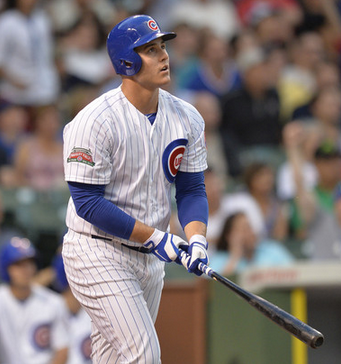
Sure, there has been plenty of attention on the big-name prospects. Javier Baez, Addison Russell, Kris Bryant. All stars who have yet to see time at the Major League level (except Baez’s cup of coffee this past month). But, more importantly for the much sooner future, is what is going on with the likes of Anthony Rizzo, Starlin Castro, and Jake Arrieta.
Each of the Cubs three “stars” for this year came in with a busload of doubters. Rizzo and Castro were coming off simply terrible years, while Arrieta hadn’t really proven anything to anyone. Well, the Cubs’ core is putting together a season that should get people pretty excited.
Rizzo is second in the NL in home runs. Castro is one of the game’s top offensive shortstops. And Arrieta is just a few innings away from qualifying to be among the league leaders in ERA.
Here is where things get really interesting, though. The Cubs lineup this week now features six of the eight position players of the future. And, as things have been going, it seems to be working.
The Cubs are 39-41 since June 1st. That may not sound sensational, but considering Edwin Jackson is 1-6 in his last ten starts, we could realistically say that if we had a valid starting pitcher in that spot in the rotation, we could be an over .500 team.
Not to mention the fact that, with free agency looming, the Cubs have already essentially declared their losing days over. The Cubs put a waiver claim out on Cole Hamels, stating for the world to know that they are going to be spenders on free agent or trade pitching this winter. While a deal didn't get done, it did call attention to what the Lovable Losers are trying to do.
There is something special going on in Chicago, and it is looking a lot like hope.
Based on this season’s performances and what the Cubs could reasonably expect, here is a very early look at what next year could hold for the Cubs:
1. Arismendy Alcantara (CF): Mendy has been a great defender while learning how to man center field for the Cubs this season. While his average is a little low for a lead-off hitter, a full season will do this kid wonders.
2. Starlin Castro (SS): As a very good hitter, but less pop than some of his teammates, Castro would be a great table-setter here in the two spot.
3. Anthony Rizzo (1B): Rizzo has bounced back from a terrible year last season, and seems to be proving that his issues against left-handed pitching are far behind him. I would love to see Anthony named the official captain of the Cubs...but let’s not get ahead of ourselves.
4. Kris Bryant (3B): The world is begging to see Bryant in Chicago as early as Monday for expanded rosters. While that doesn’t look like it’s going to happen, Bryant is staking his claim on the third base gig as early as possible.
5. Jorge Soler (RF): In his debut, Soler hit a home run on one of the most beautiful swings I’ve ever seen from a rookie. This kid looks like he can rake, and I can’t wait to see him take over as the Cubs’ best pure athlete. I see something almost Yasiel Puig-esque in him.
6. Javier Baez (2B): Baez would be batting higher if it wasn’t for his contact issues. Baez has proven that, if he gets ahold of one, it will go a LONG way. That being said, if he continues to strike out 40% of the time, he will be too much of a liability to put any higher in the order. Overall, though, you can’t sleep on a guy who has 7 homeruns in his first 23 games.
7. Chris Coghlan (LF): Coghlan has been a huge surprise (pleasantly) this season. Actually, not quite true. You see, I’ve been calling for this kind of player for years. Let a young, formerly touted talent on in a minor league contract and let him show you what he can do. Well, apparently lead the Cubs back into brighter days, is what Coghlan can do. He has been the best all-around hitter for the Cubs in the last month, and has all but guaranteed a spot in next year’s lineup.
8. Catcher: Sure, Wellington Castillo is what we have right now. This is the one spot on the diamond, though, where the Cubs could realistically go out and spend the money to find either a short-term replacement until Kyle Schwarber gets here (if Schwarber will, in fact, catch), or a long-term replacement if they’re looking for the catcher of the future. Some options include: Ryan Doumit, Russell Martin, and Geovany Soto (wouldn’t that be interesting?)
Pitching-wise:
1. Jake Arrieta: He has more than proven he can be this team’s anchor and ace.
2. Kyle Hendricks: I think he should be getting Rookie of the Year consideration, but I guess next year’s Cy Young voting will be a better way to use your votes.
3. Travis Wood: We still aren’t sure which Wood is the real one: 2013 or 2014.
4. Felix Doubront: The Cubs have had a history of helping talented yet struggling pitchers get their lives back together. Maybe we have another King Felix on our hands.
5. Free agent ace: Let’s go out and spend the big bucks. Jon Lester, James Shields, Max Scherzer. Any one of those guys could put the Cubs into winning form. RIGHT. NOW.
**Notice the abysmal Edwin Jackson will not be making the Cubs starting rotation (at least not if the ZP: Left Fielder has anything to say about it.)
We know that Cubs fans love to dream about next year. This may be a giant exercise in just that fantasy. Yet, at the same time, it looks like next year just might be here...next year.
The Major League Baseball trade deadline is by far my favorite couple of days of the year. Leading up to July 31st at 4 pm, the internet is abuzz with insight, speculation, and rumors. Every team seems to be involved at some level.
My favorite part is watching what actually happens, as compared the the wild rumors that lead up to the event. With that being said, ZP:Left Fielder is reviewing the deals that happened, and commenting on some of the deals that should have.
Best Move:
David Price to the TIgers: Of course, as it should be. The Tigers now have the past three AL Cy Young Award winners. They made this move to compete with the Oakland As. The difference between the As and the Tigers? The Tigers have four starters with World Series experience. The As have two. Price makes the Tigers the favorite in the AL.
Move That Should Have Been:
Marlon Byrd to...ANYWHERE: WIth the second Wild Card spot, more teams are looking to get ready for playoff runs. That being said, there aren’t that many bats available. Byrd would have been a good addition for the Reds, Mariners, Yankees, or, frankly, anyone else. This was a waste by the Phillies, and a missed opportunity for the rest of the middle-range contenders.
Deal I’m Glad Didn’t Happen:
Matt Kemp leaving Los Angeles: I’ve been a Kemp fan since the beginning, and hoped he would turn things around. While there is a full outfield in Los Angeles, no team has ever complained from having too many stars in preparation for the playoffs. Kemp has the ability to explode offensively at any time. The Dodgers may be very happy they didn’t do something drastic come October.
Best Move, Worst Location:
Emilio Bonifacio to the Braves: Plenty of teams could have used a speedy middle-infielder with experience. Well, frankly, all teams could have used him. To give him and a top notch lefty reliever go for just a single-A catcher was a bummer for the Cubs, who started off the deadline so boldly.
Move They’ll Wish They Could Take Back:
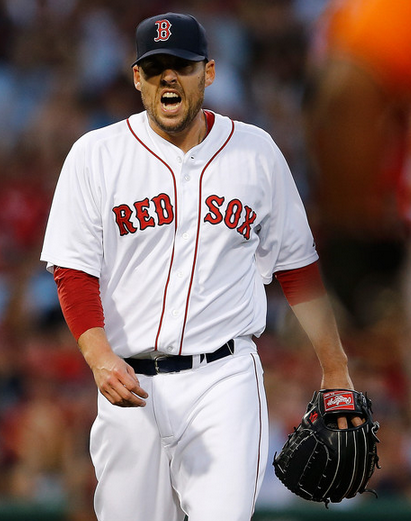
John Lackey to the Cardinals: The Cardinals seem to forget that Lackey has been the worst pitcher in baseball in the not-so-distant past. Giving up last year’s best hitter and a big-future pitcher for an aging veteran may be a short-sighted answer that will come back to bite them. Despite Craig and Kelly’s struggles this year, they will have better long-term success than Lackey will provide short-term.
Biggest Winners:
The 2015 Red Sox: While this year may be a lost cause, the Red Sox traded this year like a team that knew they were going to be back in contention soon. Two big-hitting outfielders, and a pitching prospect that has a high ceiling, the Sox look like they are getting ready for a rebound. Lester has even talked about coming back in a few months. This team won’t go away for long.
The Chicago Cubs: Yes, you read that right. The Cubs were able to do what every team hopes to do in April: sign a whole bunch of older talent for dirt cheap and flip them in July. They’ve now done it three years in a row, acquiring their current ace, their future superstar, and their top set-up man that way over the past three years. To give away Hammel and Bonifacio for top level minor league talent is something of a 2016 coup d'etat.
The 2015 Twins rotation: See a pattern here? While teams are going crazy trying to put winners together for this year, a few teams are quietly getting ready for the future. A new deal with catcher Kurt Suzuki and acquiring Tommy Milone are just that for the Twins. Has anyone noticed the Twins have a nice little rotation going with Milone, Correia, Hughes, and Nolasco? Not Oakland or Detroit, but it’s a start.
Biggest Losers:
Yoenis Cespedes: How must it feel to go from the cleanup hitter on a World Series favorite to a last-place team? Cespedes is an incredible hitter who has gone from the top to the bottom. Next year may be a fun time (MAYBE), but for the remainder of the 2014 season, this is going to be a miserable team. It will be hard to watch his old team make a long postseason run while he’s watching from home.
The Pirates and Brewers: If any year were the year to beat out the Cardinals, it was this one. The pieces were available to improve their teams, and both sat relatively quietly at the deadline. The Cardinals moves weren’t great, but they will probably be enough to beat the their two divisional foes.
The National League: Sorry guys. Whether the biggest winners were the Tigers or the As, the biggest loser was whichever National League team has to try to win the World Series against either of the best rotations in baseball. Can Clayton Kershaw pitch seven games in a row. Cygh...
Jose Quintana's defense couldn't play any better
than their broadcasters could call the game.
I know it’s a rough day at the gym when I’m so desperate for something to watch on TV that I actually turn to a White Sox game. This was the predicament I was in yesterday. To make matters worse, it wasn’t even a real White Sox game; it was a replay of a game played the day before.
It was the last 10 minutes on the elliptical, though, and I needed to keep my mind off of the burning in my legs, so I stuck with it. The Dodgers were having a big inning (I knew that before it happened, because I had seen the highlights that morning). Over the course of the ten batter inning, the White Sox committed four defensive blunders resulting in a 5 run rally by LA. Jose Quintana, the starter for the White Sox, just couldn’t catch a break.
As it turned out, neither could I. It dawned on me that, for the entirety of the 15 minutes I watched the game, the announcing team hadn’t once mentioned that there was another team on the field. The coverage was 80% discussing (or should I say lamenting) the play of the White Sox, and 20% telling me what was actually happening on the field. Of course, not that the Dodgers had just recorded a hit: the White Sox had let up the hit. If this had been a radio broadcast, I would have had no idea who the opponents were; they were never mentioned by name or by likeness.
As a baseball fan living outside of his home market, I saw a lot of baseball last year, some nationally televised, others on local broadcasts that I was able to find on MLB.com. Having heard plenty of announcing crews and their style of describing baseball, Ken “Hawk” Harrelson and Steve Stone must have been the worst I’ve ever experienced.
I know everything I say about the White Sox needs to be said with the caveat: I hate the Sox. I’m a true Cubs fan who can’t stand what they Sox stand for. But as a fan of the game of baseball, I’m objective enough to say things like “Jose Abreu is a monster,” and “Paul Konerko is a class act,” and “Chris Sale can flat out pitch.” In the same breath: The Sox TV crew suck.
Gordon Beckham's defensive struggles made for an LA
big inning. Not that you would have known it was LA...
I understand that Hawk is one of the most iconic announcers in the game. We’ve all come to know, if not love, his phrases, like “He gone,” for a strikeout, or a hearty “YOU CAN PUT IT ON THE BOARD!!! YES!!!” for a dinger. But being so narrow-minded that you don’t even acknowledge the other team on the field is a real disappointment for any fan trying to really take in a ballgame.
For any game, you want to hear a little bit about the other team. Who are their stars? How are they doing this year? What style do they play? This is even more magnified in the case of inter-league play. Sox fans don’t often get to see an NL West foe. None of that happened, though, as Hawk and Steve spent their entire air-time talking about their own team.
Good broadcasting is telling a story. A baseball story is not complete with only one side of the game, and while their paychecks are coming from the White Sox, they aren’t paid on commision for the number of times they mention the team name.
The month of May is a great one for sports fans. Two of the most intense playoffs in professional sports interlace, keeping TV channels stocked every night with a high-intensity, do-or-die game. Picture in picture is a fan’s best friend, flipping between the NBA on TNT and ESPN, and the NHL Stanley Cup Playoffs on NBC Sports Net.
With both sports in the Conference Championship round, there are 8 teams still fighting for a chance to hoist their league’s trophy. On some nights, though, how is a sports fan supposed to pick which team to watch? ZP: Left Fielder is here to help. This power ranking of the eight remaining teams will give an insight into not only the most successful teams, but the ones that are the most fun to watch:
8. Canadiens: Poor Canada. Not only can this team not spell (I like to make fun of them for that every chance I get), but their very real chance for a Cup went crashing just like Chris Kreider into Carey Price. Without a strong goalie, this team is just treading water until the Rangers take them down.
7. Thunder: All post-season, the Thunder have been grasping at maintaining any form of dominance. The beginning of the Western Conference Finals doesn’t bode well, and the Thunder will have to find other ways to play than begging Durant and Westbrook to score 50 apiece every night.
Lundqvist is solidifying his role as NHL's top netminder.
6. Rangers: The Rangers are flying high under the direction of Henrik Lundqvist, who is playing his way into the “best goalie in hockey” title. Unfortunately, though, the team falls in this ranking because of the struggles of the Canadiens. As much as it’s fun to watch a team reach the next level, this particular series is negatively impacted by a one-sided look. If the Canadiens surge, the both of them could rise. I think the Rangers would rather keep things the way they are, though.
5. Pacers: This is the hardest team of the eight to rank. Which Pacers team are we really talking about, anyway? The team that struggled to pull off a seven-game victory in the first round to the lowly Hawks? The team that Stephenson led monsters from the first game and three quarters of the new Heat series? In either case, this is fun to watch. You could be watching the best team in the NBA or a train coming off the tracks. It’ll keep you entertained, that’s for sure.
The Spurs can do no wrong as they take a 2-0 series lead.
4. Spurs: The Spurs are simply making the rest of the league look silly. Their stars are performing at a ridiculous rate, and the word “dynasty” just keeps coming up, as Tim Duncan, Tony Parker, and Manu Ginobili just took over the record for the most combined wins in postseason history together. They take a hit in this rankings, though, because, when you’re going this well, you barely need to watch the game anymore. The box score will be a glee-fest all of it’s own.
3. Kings: The Sharks couldn’t beat them, despite a three-game lead in the series. The Ducks couldn’t do it either, despite a home-field advantage for another game 7. How does anybody beat the Kings? Better yet, these Kings are fun to watch, because they make things interesting (sometimes too interesting for LA fans). If the first two games were any indication, the Chicago-LA series will be one not to miss.
The Hawks took game 1, but gave away the 2nd, sending
this series back to LA as the most exciting series in the playoffs.
2. Blackhawks: No team in the NHL is built for success quite like the Blackhawks. Their two young stars (Jonathan Toews and Patrick Kane) are the brightest in the business, and their supporting cast shows the depth of a proven winner. While a bad loss last night didn’t look pretty, the Hawks are built to bounce back, especially with some extra rest. This team is the most fun team to watch in the most fun playoffs in the world.
1. Heat: How can you find anything more intriguing than a team trying to go for a three-peat? Miami seems to play the bare minimum intensity level for about 40 minutes, then explode for 8 minutes of absolutely stunning play. There may come a day when that isn’t good enough, but at this point, they have yet to meet their match. Whether you’re hoping for another big win or just begging for the King to fall, the Miami Heat lead the league in intrigue.
After a Rookie of the Year win and a third place finish in the Cy Young voting, Jose Fernandez was sitting pretty in Miami. The team began the season with the best home record in baseball, and was an overall shock, undoubtedly, at least in part, due to their young stud ace.
That all came to a screeching halt on Monday when Twitter began to blow up with rumors that Fernandez was being put on the Disabled List. What began as an elbow strain eventually became a season-ending possibility. Although the Marlins will continue to evaluate the situation, it looks like they will be without their best pitcher for the year.
Fernandez joins a long list of young flame-throwers who have lost a year to arm surgery, most notably Stephen Strasburg of the Nationals and Matt Harvey of the Mets. In each case, the game’s brightest pitching stars are sustaining arm injuries that require major surgery.
What, though, does this growing trend say about the future of the game? Young guns are an important part of building a dynasty, but the need to wait an extra year can not only cause a pause in a playoff push but can also risk the player not recovering in the ways that the team may want.
Another piece of the puzzle is the ethical issues associated with asking players to give their all in a way that will almost inevitably lead to injury. It isn’t that these players are being mismanaged in the majors. They are being coached to the point of injury from the time they first demonstrate their unbelievable skills. This may be as early as middle school. A kid who can throw the hardest becomes the biggest star of his high school team, his college club, and even his minor league affiliate for the franchise that will be betting the farm on him. This gets to the complexity of the issue: these players are being asked to perform, to play for their team, in ways that will both get them the big contract, but also the big hurt.
Going forward, coaches at every level needed to be trained what to do when they are blessed with talented young men to throw the baseball. While a young kid might want to pitch every inning of the season, it is to a disadvantage for his long-term success to put that much strain on his elbow.
For the Marlins, and all of major league baseball, the best they can hope for is a speedy recovery and a 2015 return of the same dominant star from the past. As eyebrows begin to go up, though, about the new epidemic of elbow injuries, it is clear that something is going to have to change. It might be a new era of hitting dominance. It may be a new era of subtle, finnessed pitching rather than knockdown heat. EIther way, the injury to Fernandez is, quite possibly, the beginning of a change in Major League Baseball.
In late March of last year, the Giants locked up catcher Buster Posey on a nine-year, $167 million deal. In May, the Cubs signed Anthony Rizzo to a seven-year deal to go with Starlin Castro’s new contract which had been signed the August before.
For the next year, Major League Baseball saw an influx in signings that showed team locking up promising talent for long-term contracts, in what can only be considered an expensive gamble. The theory was as follows: if we can lock up our future before they start producing like superstars, we can pay them good money without having to pay them great money.
This is, of course, a reaction to the contracts that superstar free agents like Robinson Cano, Josh Hamilton, and Albert Pujols have been getting upon reaching their payday. Teams simply cannot afford to wait until stars pan out, they have to instead get them locked up early.
This is the situation that faces the Angels and Mike Trout. Trout has already proven that he has superstar talent, but he also is under team control for the next few years. Until recently, the Angels seemed content (if not a little disconcerted) to see where things would go. The problem is, though, if Trout continues his dominance, they will have to pay him more than any other player in Major League history. They probably waited one year too long, but got away with what looks like a pretty fair deal for all parties involved in Trout’s new six-year, $144.5 million deal. At the end of the six year deal, Trout would be 29, and still eligible to bring home a contract worth over $300 million.
Mike Trout is already going to make big money, with another significant contract in his future.
Baseball is at a point where the big-time contracts that are being given to the 30 year-old stars have yet to run out. We are still trying to figure out how much bang teams will most likely get for their substantial bucks. Alex Rodriguez, the “inventor” of the mega-deal, is STILL within the contract that he signed that revolutionized the money market in baseball. If he is the standard, then teams should be very concerned about signing the dotted line for these substantial contracts.
What is especially interesting is the types of players that are getting the new mid-level deals. Recently, Matt Carpenter of the Cardinals and Jason Kipnis of the Indians each signed new deals These aren’t the major slammers that get the big deals. These are the regular producers, the grinders, who would get expensive if they were let to hit the free agent market. The Cardinals and Indians basically realized what they had in their system and decided to get them locked up before anyone else could figure it out.
There is, though, the risk of investing highly in a young player who will not pan out. The Cubs are in fear of realizing this with the contracts for Rizzo and Castro. Both signed significant deals prior to (or during) the 2013 season, and proceeded to bust, having terrible years. There is, of course, optimism that the two young studs will turn things around, and that they will lead the Cubs back to the promised land, but there are, of course, risks to signing a pair of 24 year-olds to long-term, big money deals.
The landscape of baseball is changing, and we are standing on the cusp of a financial revolution. Contracts keep getting steeper and steeper, and there will come a time when we can’t get any bigger than the $240 million that Robinson Cano got from the Mariners. To save themselves from having to break the bank later, teams are becoming more interested in signing contract extensions, rather than getting into bidding wars for free agents. Young, exciting, and still growing players are reaping the benefits of these contracts, and have started the revolution in the way teams try to create their foundations for years to come.